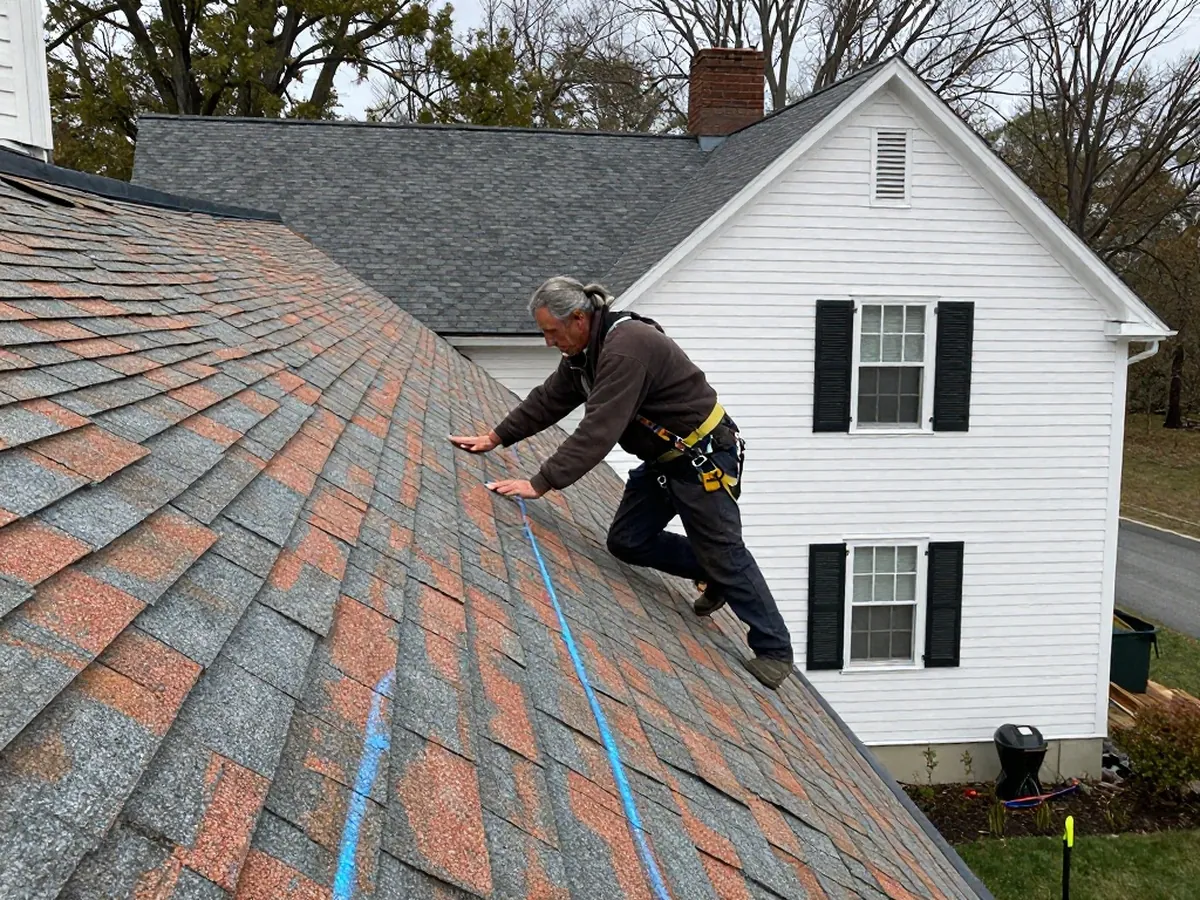
Size sets the shingle; the joints set the detail work
A bigger roof takes more material and more days. The joints decide how much careful work goes into those days. Every change of slope adds a valley, every wall adds step flashing and every pipe or vent adds a collar to seal. The Department of Energy calls valleys and roof penetrations the most vulnerable parts of a roof, so a small roof with many of them can carry more detail work than a larger plain one.
The number of slopes, chimneys and walls is worth counting from the yard before the first quote comes in.
What lies under the old shingles
A tear-off is the moment the deck shows itself. Boards that look fine from above can be soft or stained below, and each one replaced adds to the job. The old covering matters too: a quote needs to state how many layers come off and what happens if surprises turn up.
FEMA's sloped-roof sheet says that when the whole covering is removed, an upgraded underlayment goes on first. That is a materials choice, and it shows up as a line in the scope.
The small parts carry a lot of the work
Flashing, drip edge, vent collars and ridge caps look minor on paper. The Department of Energy describes step flashing laid in pieces like shingles, with a chimney needing three metal layers of its own. FEMA describes flashing built in with the shingles and the underlayment.
Two quotes with similar totals can differ here, one replacing the metal and the other reusing it. Ask which pieces of metal are new.
Where the water goes after the roof
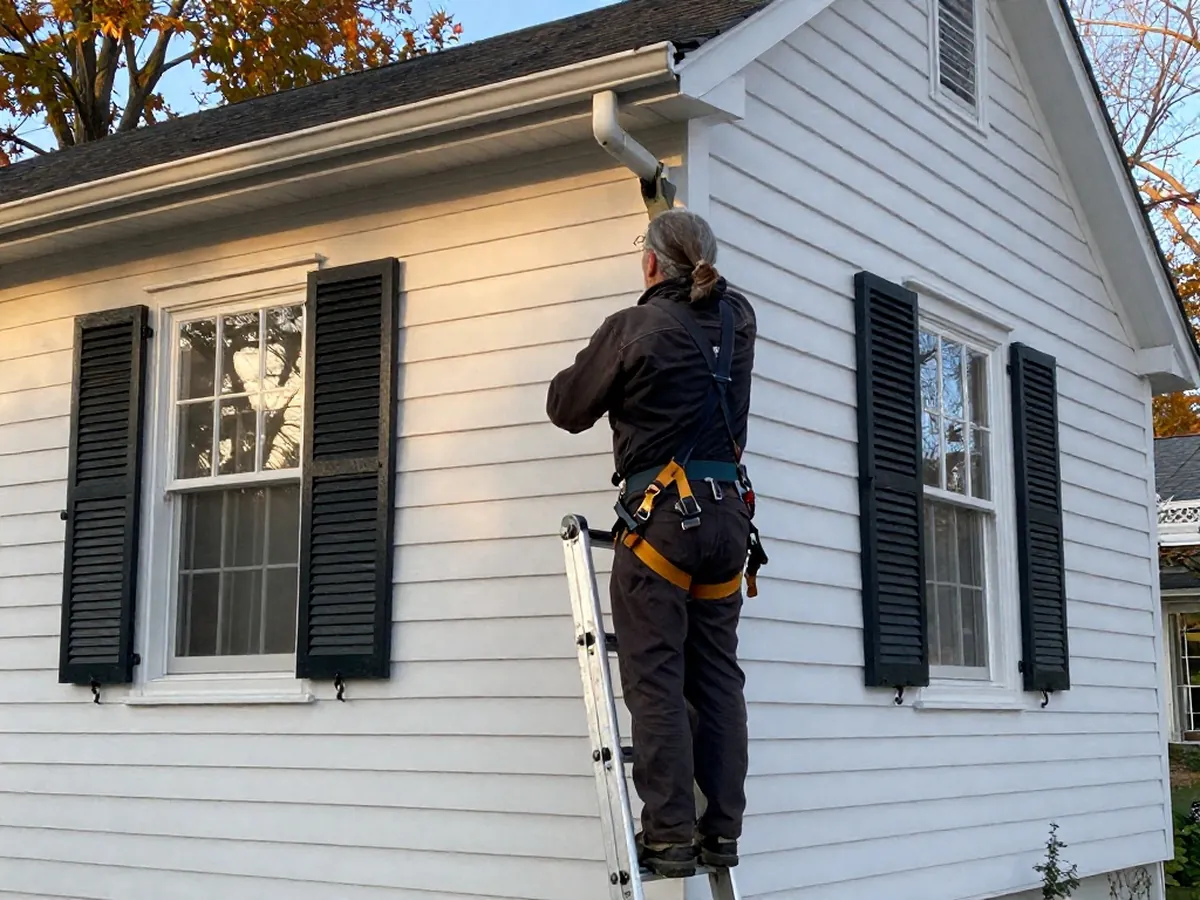
Gutters and downspouts sit outside the shingle line but inside the problem. Rutgers works out that an 800-square-foot roof can send about 500 gallons to one downspout during a one-inch rain, and the EPA suggests landing it in a barrel or onto soil. On a flat roof, FEMA's low-slope sheet names drains, scuppers and an overflow route as the way water leaves, and says a reroof is the time to deal with ponding.
A quote that leaves out drainage may have left out the cause of the original leak.
The calendar is a cost too
Weather moves schedules, and storm demand moves them further. The asphalt roofing trade group notes that contractors from far away turn up after storms and urges repairs before winter. University of Minnesota Extension says roof work in winter is for professionals. At Somerville airport the low reaches freezing on about 124 days a year, so a late start can push work into the cold months.
A quote needs to give the start and finish dates, and say what happens to them if rain or snow gets in the way.
A quote is a document, not a number
New Jersey's home improvement rule applies above $500 and calls for a written contract that everyone signs, with any changes written in too. After a covered loss, the state insurance department calls the insurer's suggested contractor optional, and the federal cooling-off rule lets a buyer cancel many home sales of $25 or more within three days.
Line items make quotes comparable. When one says "roof" and another lists fifteen items, the totals are not measuring the same job.
Which quote line is hard to read, and who can help?
Bring the line items and the questions. The full reroofing job and the roof condition check are the two jobs where the scope matters most.
Call (908) 827-6709 with the paper in hand, and the contractor can talk through what each line covers. If the house is rented, send the quote to the owner, who signs for the work.
Quote factors, side by side
| Factor | What it changes | How to see it |
|---|---|---|
| Roof size and slopes | The amount of shingle and the days on the roof | Count slopes and valleys from the yard |
| Number of layers | Tear-off time and disposal | The roofer counts layers along an edge |
| Deck condition | Whether boards are replaced | Soft or stained boards show during tear-off, so ask how replacements are handled in writing |
| Flashing and openings | The metal and detail work at chimneys, walls and vents | Count chimneys, wall joints and pipes, and ask which metal is new |
| Edge metal and underlayment | What goes under the shingles and along the edges | Ask for the underlayment and drip edge by name |
| Drainage | Gutters, downspouts and, on a flat roof, the drains | Ask where the water goes after the job |
| Attic air and insulation | Whether ice trouble is treated at its source | Ask whether air sealing is in the scope |
| Season and weather | Start dates, finish dates and temporary covering | Ask what happens to the dates if weather gets in the way |
| Insurance involvement | Who inspects and what gets documented | Photograph first, and remember the insurer's contractor is optional |
| Written scope | Whether two quotes can be compared | Line items for materials, steps, dates and changes |
Where this comes from (13)
- FEMA, Fact Sheet 3.3.1: Roof Systems, Sloped Roofs (Mar 2022)
- FEMA, Fact Sheet 3.3.2: Roof Systems, Low-Slope Roofs
- U.S. Department of Energy, Building Science Education, Water-managed roof assembly
- U.S. Department of Energy, Building Science Education, Step flashing at roof-wall intersections
- U.S. Department of Energy, Building Science Education, Waterproofing chimneys
- Asphalt Roofing Manufacturers Association, Assessing roof damage after Superstorm Sandy (7 Nov 2012)
- Cornell LII, N.J.A.C. 13:45A-16.2, Home improvement contracts
- Federal Trade Commission, Buyer's Remorse: The FTC's Cooling-Off Rule May Help
- NJ Department of Banking and Insurance, Insurance claims after a storm
- University of Minnesota Extension, Dealing with and preventing ice dams
- Rutgers Water Resources Program, Rain barrels
- U.S. EPA, Soak Up the Rain: Disconnect and redirect downspouts
- NOAA National Centers for Environmental Information, 1991-2020 monthly normals, Somerville Somerset Airport (USW00054785)
Checked 1 Nov 2026